This post contains affiliate links. If you make a purchase through links on our site, I may earn a small commission. Click to see full details of my Privacy Policy.
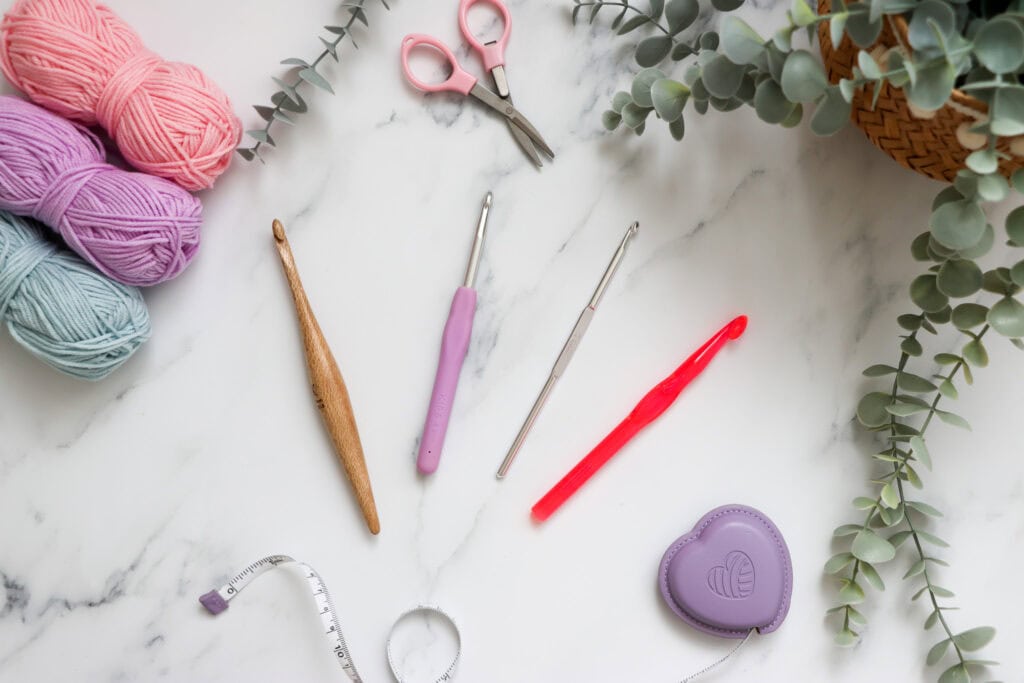
If you’ve ever shopped for crochet hooks, you’ve probably noticed that they come in a huge variety of sizes, materials and shapes. Add in the confusion of UK and US sizing systems, and it’s no wonder many crocheters wonder which hook they should be using!
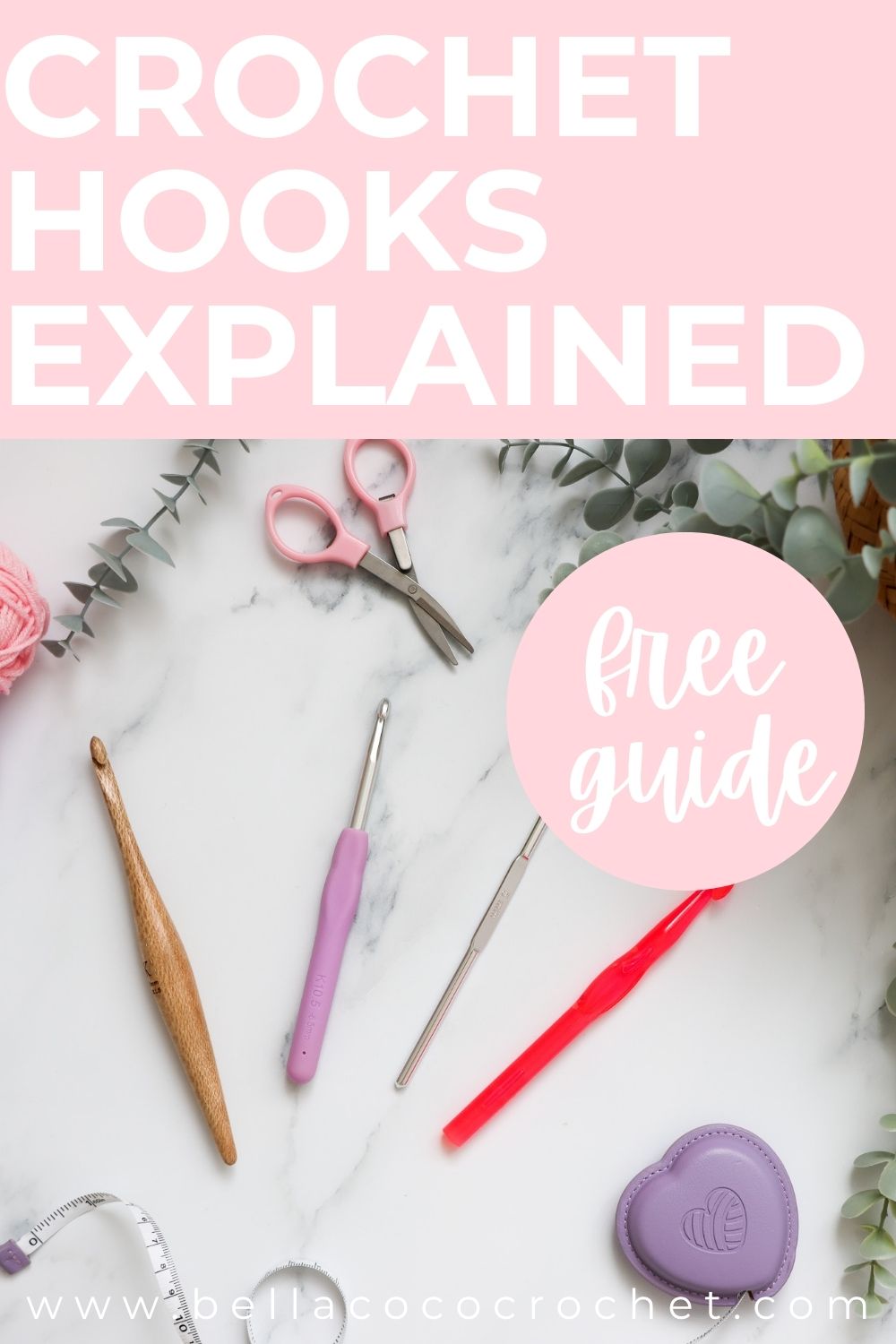
In this guide, we’ll explore crochet hook sizes, the differences between UK and US terms, the various hook shapes available, and what they’re best suited for.
Understanding Crochet Hook Sizes
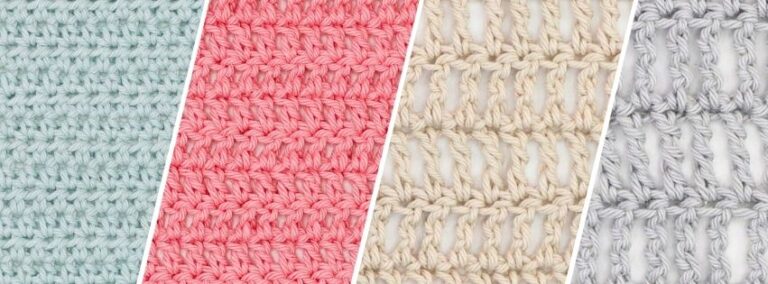
The size of your crochet hook affects the size of your stitches and the overall look and feel of your finished project.
Generally speaking:
- Smaller hooks create tighter, denser stitches.
- Larger hooks create looser, more open stitches.
- The hook size recommended for a project is usually listed on the yarn band and within the pattern instructions.
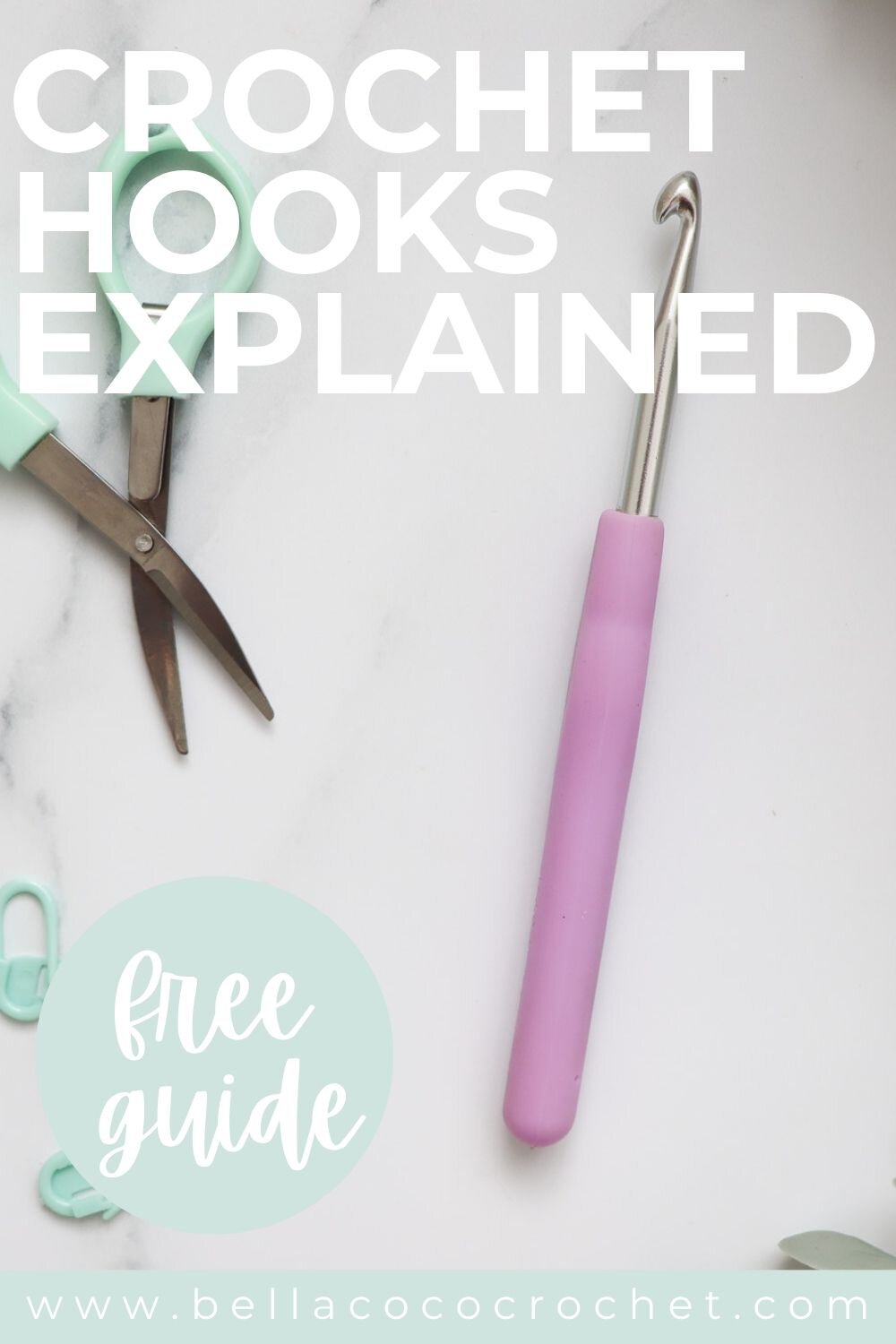
Today, most crochet hooks are labelled using metric measurements in millimetres (mm), making it much easier to identify the correct size regardless of where you live. However, if they don’t or if the number rubs off, you can get a handy little tool to help you identify the size of the hook.
Common Hook Sizes
| Metric Size | Common Uses |
| 2.0mm – 3.5mm | Fine yarns, lace projects, delicate garments |
| 4.0mm – 5.5mm | DK and Aran weight yarns, blankets, garments, accessories |
| 6.0mm – 8.0mm | Chunky yarns, quick projects, cosy blankets |
| 9.0mm+ | Super chunky yarns, home décor, oversized accessories |
Remember, these are only guidelines. Always check your pattern and complete a tension swatch if gauge is important.
UK and US Crochet Terms: What’s the Difference?
One of the biggest sources of confusion for crocheters is the difference between UK and US crochet terminology.
It’s important to note that crochet hook sizes themselves are largely standardised using millimetres; however, some hooks will be labelled with US terms.
For example:
| Metric Size | Metric Size |
| 3.5mm | E-4 |
| 4mm | G-6 |
| 6mm | J-10 |
| 10mm | N-15 |
Download Your FREE Hook Size Conversion Guide PDF Below
Types of Crochet Hooks
Inline Hooks
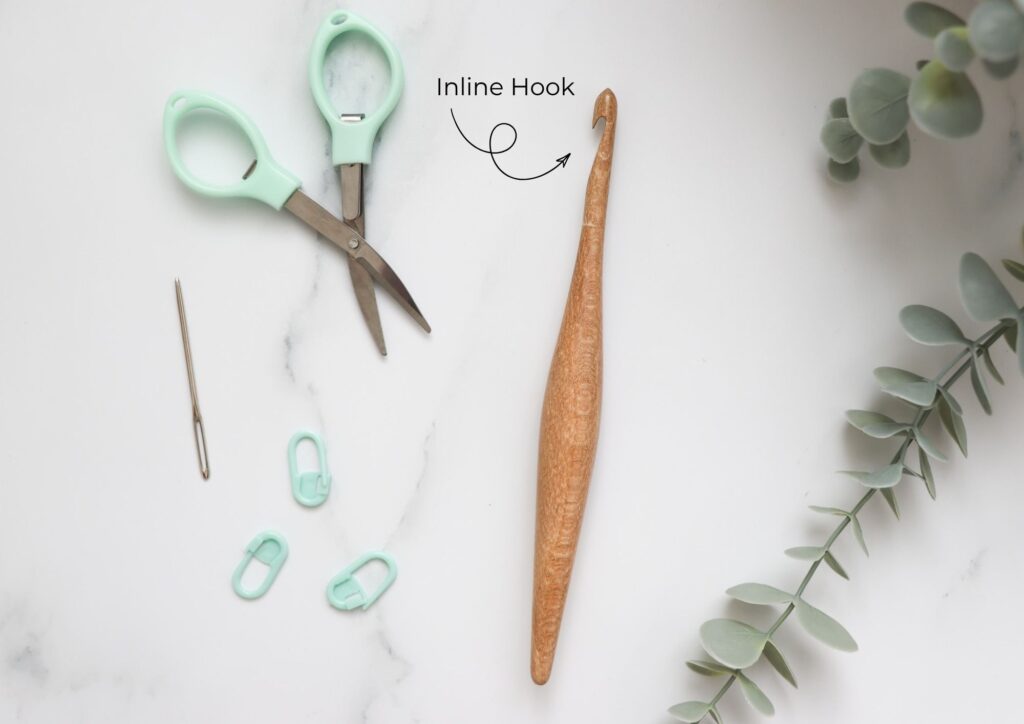
Inline hooks feature a hook head that is aligned with the shaft of the hook. The throat is generally deeper, and the head tends to be less rounded.
Many crocheters find inline hooks:
- Produce more consistent stitch sizes
- Offer excellent stitch control
- Work particularly well for beginners learning tension
Tapered Hooks
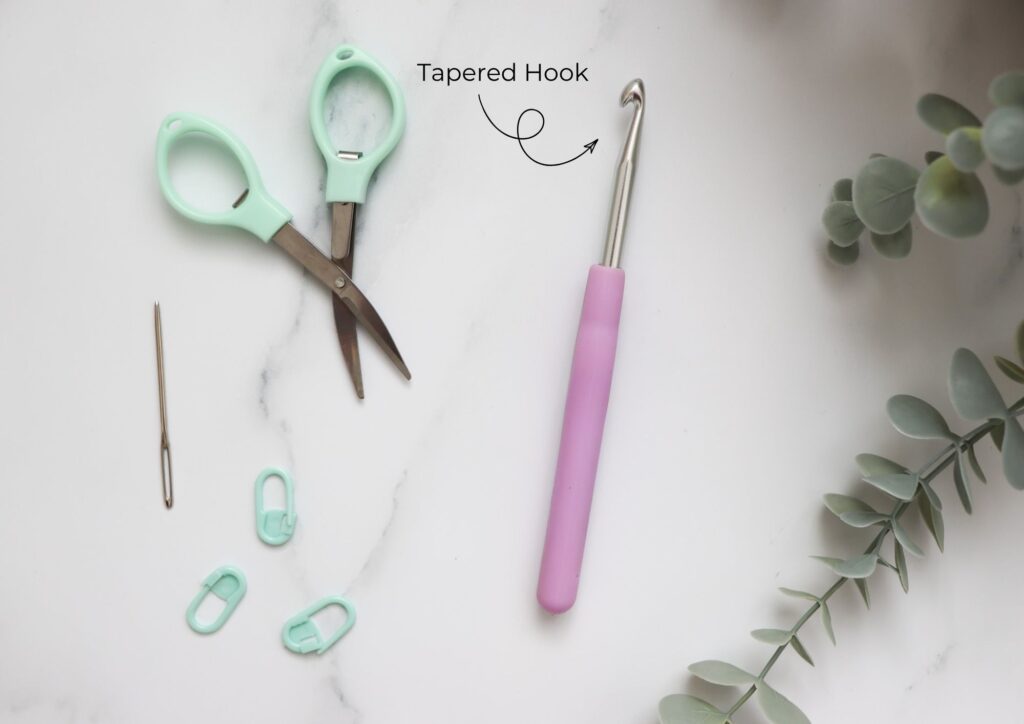
Tapered hooks have a gradually narrowing throat and a more rounded hook head.
These hooks are often preferred because they:
- Glide smoothly through stitches
- Work well with a wide variety of yarns
- Feel natural for fast crocheting
Popular examples include Clover Amour.
Ergonomic Hooks
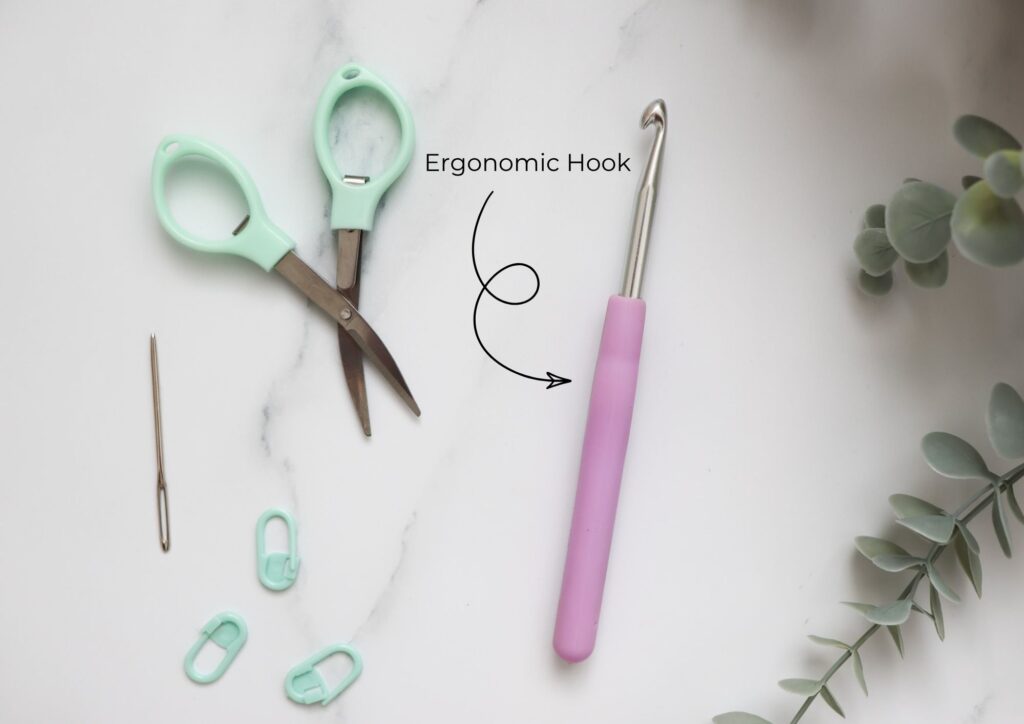
Ergonomic hooks feature larger handles designed to reduce strain on the hands and wrists.
Benefits include:
- Improved comfort during long crochet sessions
- Reduced hand fatigue
- Better grip for those with arthritis or joint discomfort
Many modern crochet hooks are available with ergonomic handles in silicone, rubber or moulded plastic.
Wooden Hooks
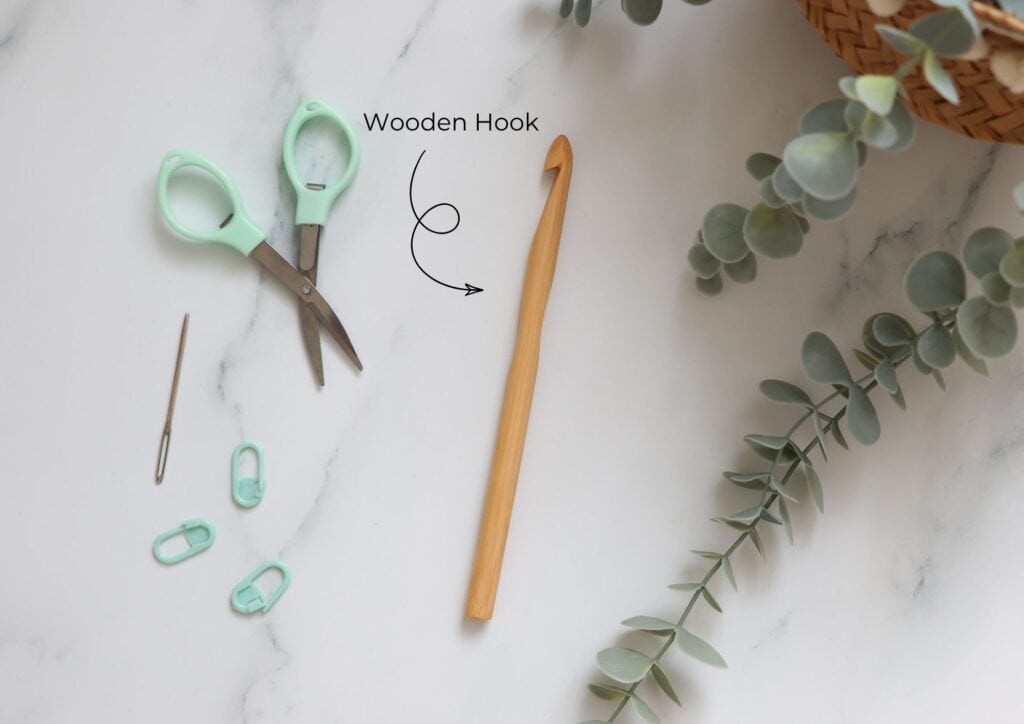
Wooden hooks are lightweight and warm to hold.
They’re ideal for:
- Natural fibres
- Larger hook sizes
- Crocheters who prefer a slower, more controlled stitch rhythm
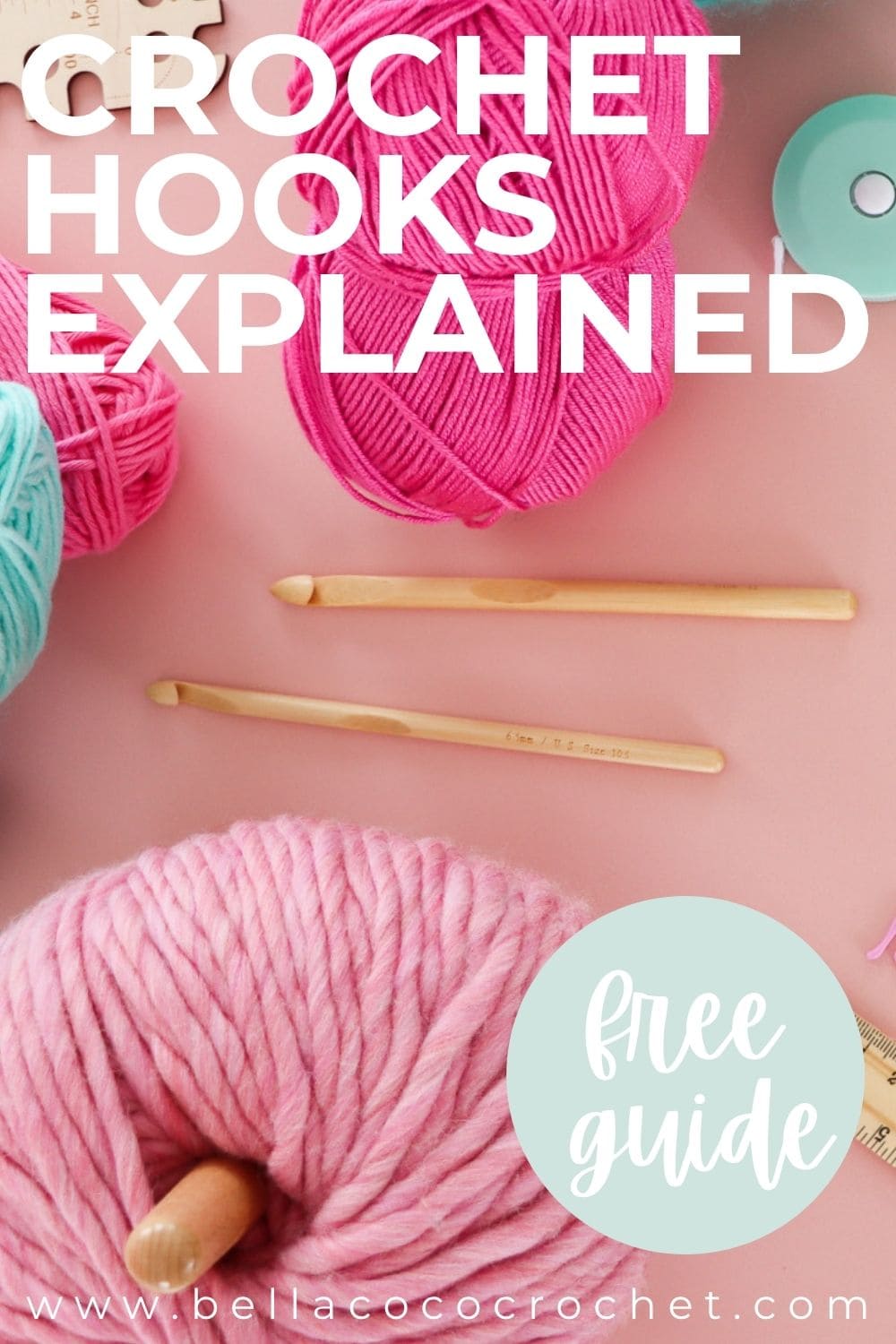
Bamboo hooks are especially popular for beginners because they offer slightly more grip than metal hooks.
Metal Hooks
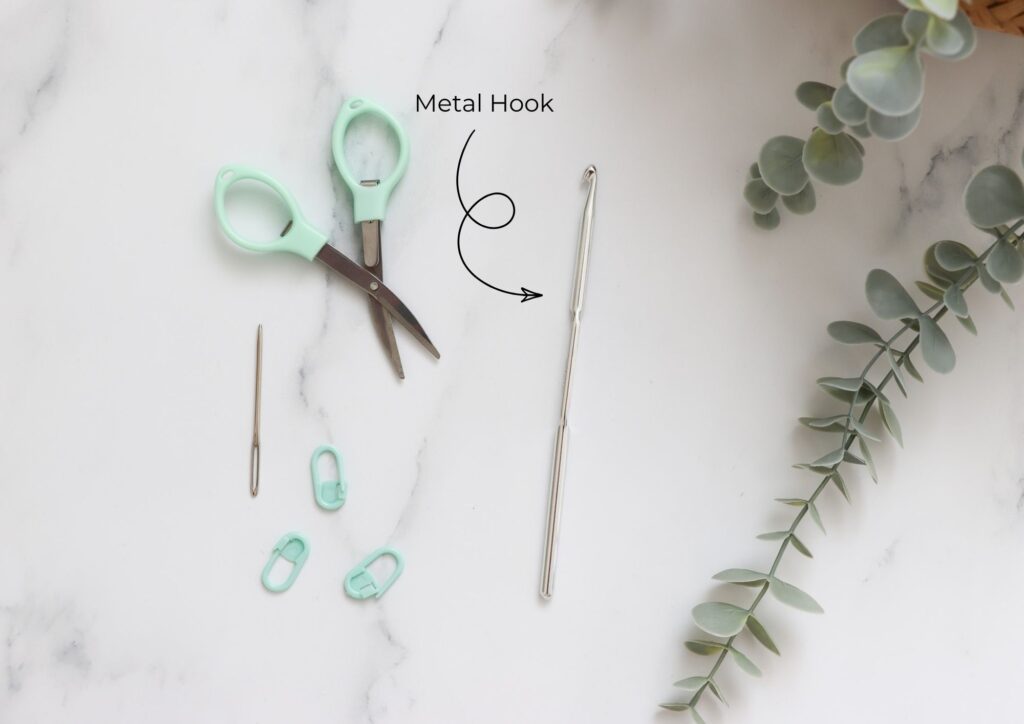
Metal hooks are smooth, durable and widely available.
They’re excellent for:
- Cotton yarns
- Fine yarns
- Fast crocheting
Aluminium hooks remain one of the most popular choices.
Which Hook Shape Is Best?
The truth is that there is no single “best” crochet hook. Many crocheters develop personal preferences over time based on:
- Hand position
- Tension style
- Yarn choice
- Project type
If you’re new to crochet, trying both inline and tapered hooks can help you discover which style feels most comfortable.
Choosing the Right Hook for Your Project
The Yarn Weight
You can find the recommended hook size for your chosen yarn on the yarn band. Every crochet pattern will state the hook size needed for that project. As your confidence builds, you might go up or down a hook size to create more drape or density in your fabric.
The best way to remember is that the thicker the yarn, the bigger the hook required, and the finer the yarns require smaller/thinner hooks.
The Finished Fabric
Want a drapey shawl? You may choose a slightly larger hook.
Making an amigurumi toy? A smaller hook can help create tighter stitches that prevent stuffing from showing through.
Comfort
Just like most things, we all find different crochet hooks more or less comfortable to work with. If you find yourself crocheting regularly, investing in ergonomic hooks can make a huge difference to your enjoyment and comfort.
Your Crochet Checklist
- Why You Should Learn to Crochet: The Benefits of Picking Up a Hook
- Getting Started with Crochet: Essential Tools Every Beginner Needs
- Understanding Yarn Weights and Materials: Choosing the Right Yarn for Your Crochet Project
- Crochet Hooks Explained: Sizes, Shapes and Choosing the Right Hook YOU ARE HERE
- Different Ways to Hold a Crochet Hook: Finding What Feels Right for You Coming Soon!
Join Our Crochet Community