This post contains affiliate links. If you make a purchase through links on our site, I may earn a small commission. Click to see full details of my Privacy Policy.
Crochet is a wonderfully relaxing and rewarding craft that allows you to create everything from cosy blankets and stylish garments to adorable toys and home décor. If you’re new to crochet, walking into a craft store or browsing online can feel a little overwhelming with all the different tools and accessories available.


The good news? You only need a few basic items to get started. In this guide, we’ll walk you through the essential crochet equipment, what each tool is used for, and which items are worth investing in as your skills grow.
1. Crochet Hooks

The crochet hook is the most important tool you’ll need. Crochet hooks come in a variety of sizes and materials, including:
Which size should beginners use?
For beginners, a 4mm to 5.5mm hook is often a great starting point, especially when paired with a medium-weight yarn; we’ll go through yarn weights shortly. Larger hooks make stitches easier to see and work with while you’re learning. The smaller the hook, the smaller the stitches; the bigger the hook size, the larger the stitches.
Top Tip
You can find the recommended hook size for your chosen yarn on the yarn band. This helps ensure your stitches are the correct size and your finished project turns out as intended. You can deviate from this guidance and experiment; however, as a beginner, I would stick to the recommendations until you’ve built up your confidence.

2. Yarn
Choosing the right yarn can make a huge difference to your crochet experience. However, when starting out, the wide variety can be overwhelming. We’re going to keep things simple to start with and circle back around to the different types of yarn out there.
What yarn should beginners choose?
A smooth, light-coloured yarn in a DK (Double Knitting) or Aran weight (Worsted) is ideal. Lighter colours make it easier to see your stitches, while smooth yarns help prevent splitting.
Splitting: What do you mean?
Yarns are woven; however, yarns can be woven in different ways. When working with some yarns, you can accidentally catch your hook on the yarn, causing the yarn to split. This often happens with cotton yarn, so we advise avoiding this type of yarn when learning. Cotton yarns also lack stretch, which can make things difficult when first starting out.

Avoid for now:
- Very dark colours
- Fuzzy or fluffy yarns
- Novelty yarns with unusual textures
- Fine yarns
- Cotton yarns
Where To Shop Yarn
3. Scissors

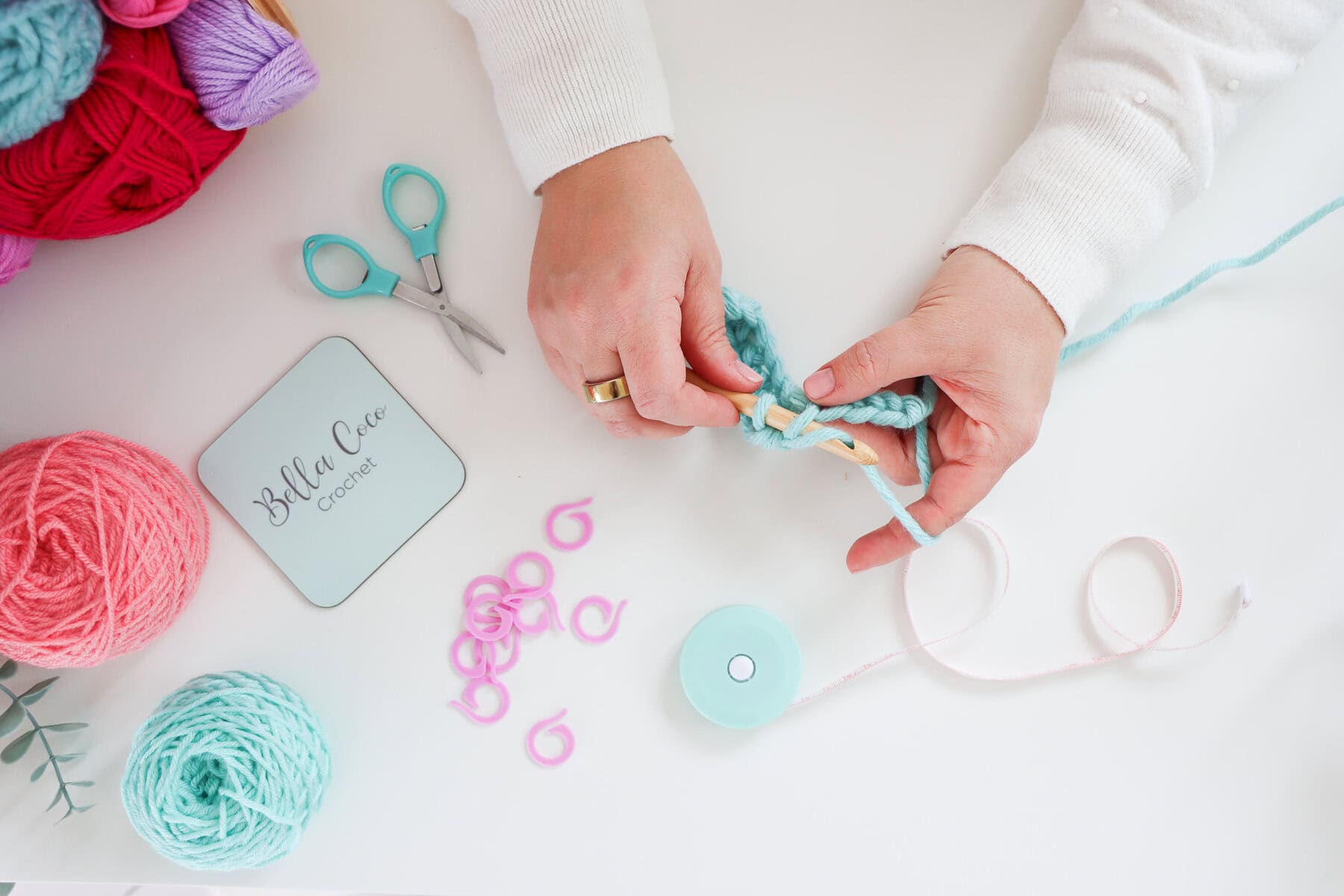
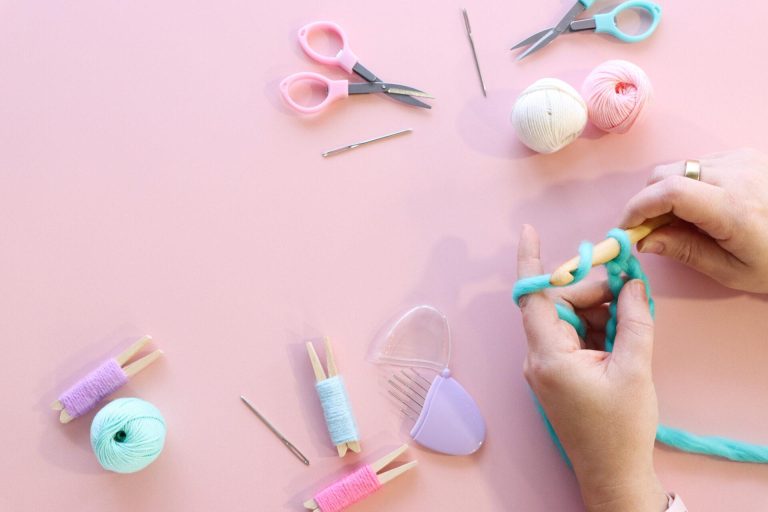
A small pair of sharp scissors is essential for every crochet kit. If your scissors are blunt, they will fray the end of your yarn, making it difficult to thread it onto a darning needle to sew in your ends. Here are some scissors I recommend.
Top Tip
Keep a dedicated pair in your crochet bag so they’re always easy to find when you need them! Did you know that cutting paper will blunt your craft scissors?
4. Tapestry or Darning Needles
Two names, same thing. You’ll soon realise that in the world of crochet, one thing/item will have two different names, but we’ll try and keep this simple. These large-eyed needles are a crocheter’s best friend when finishing projects.
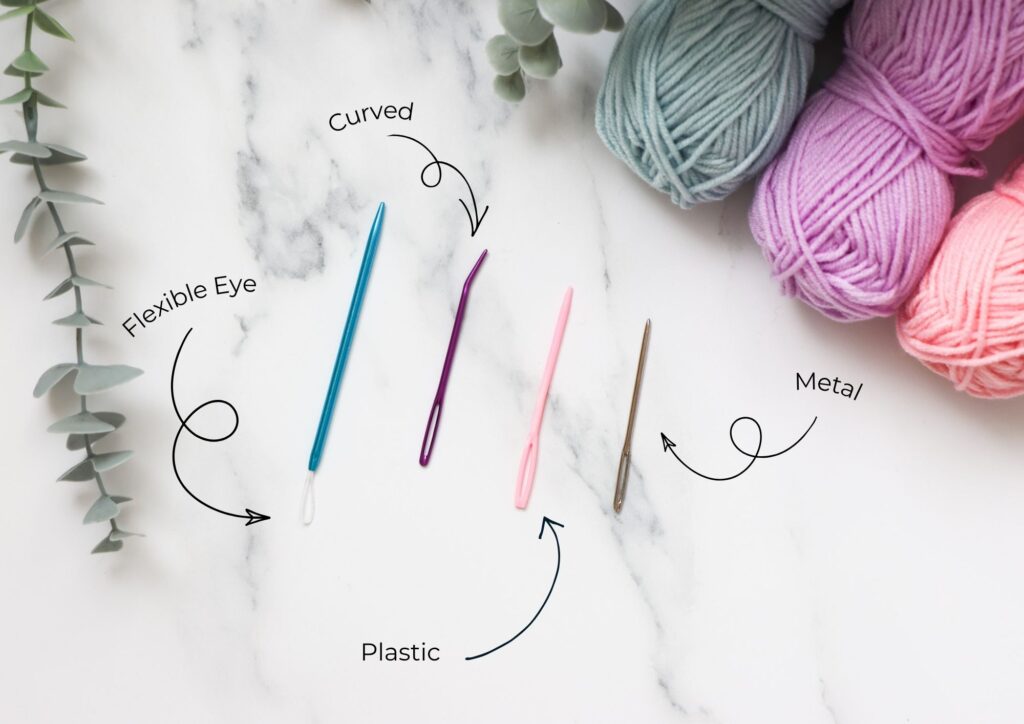
What are they used for?
Tapestry/darning needles are used to weave in loose yarn ends and sew crochet pieces together.
Why are they important?
Neatly woven ends help make your projects look neat, professional and more importantly, prevent them from coming undone over time.
5. Stitch Markers
Stitch markers are small clips, rings, or locking markers that can be attached to your work.

What are they used for?
They help mark:
- The beginning or end of a round
- Important stitch positions
- Pattern repeats
- Increase or decrease points
Why crocheters love them!
Stitch markers can save a lot of counting and help you keep track of where you are in a pattern. They are a staple for your crochet kit, and you will always use them!
6. Measuring Tape
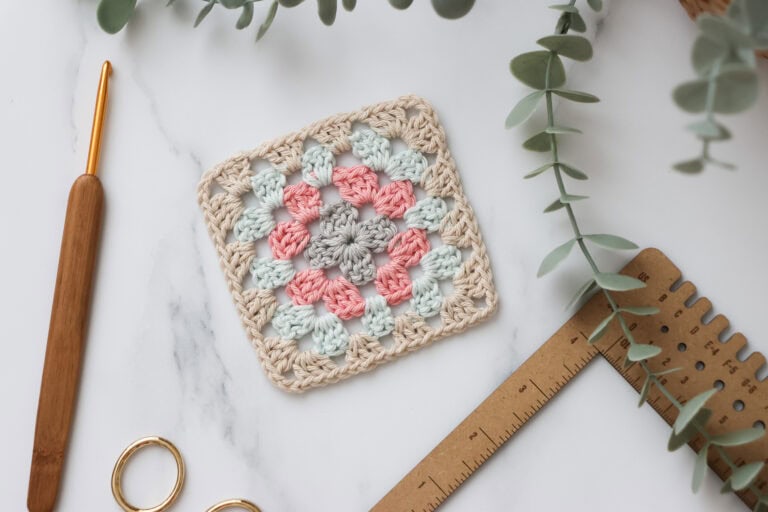
A flexible measuring tape is useful for checking the size of your projects as you work.

What is it used for?
It helps ensure:
- Garments fit correctly
- Blankets reach the desired size
- Gauge swatches are accurate
Top Tip
Checking measurements regularly can prevent disappointment later on and save time by catching sizing issues early. We’ll talk more about the importance of measuring and gauge later on.
7. Row Counter (Optional)
A row counter is a handy tool, especially for larger projects or amigurumi (toys).
What is it used for?
It helps track how many rows or rounds you’ve completed. Sounds simple, but it’s easy to lose track of your rows.
Alternative Options
Many crocheters use:
- A notebook
- Sticky notes
- Mobile phone apps
- Digital counters
Use whatever method works best for you.
8. Project Bag or Storage
As your crochet collection grows, you’ll quickly appreciate having somewhere to store your yarn, tools and projects.

Why do I need this & What is it used for?
A project bag helps keep:
- Yarn clean and organised
- Hooks together
- Patterns protected
- Current projects portable
Whether it’s a dedicated crochet bag, basket, or storage box, organisation makes crafting more enjoyable, more organised and more accessible!
9. Understanding Crochet Hook Sizes
One thing that often confuses beginners is crochet hook sizing. Different countries may use different systems, but the millimetre (mm) measurement is universal and the easiest to follow.
Common beginner-friendly hook sizes include:
- 4mm (G/6)
- 4.5mm (7)
- 5mm (H/8)
- 5.5mm (I/9)
When following patterns, always check the recommended hook size and remember that everyone crochets with slightly different tension.
Download Your FREE Hook Size Conversion Guide PDF Below
10. Recap: A Simple Beginner Crochet Kit
If you’re just starting out, here’s a simple kit that will cover most beginner projects:
✓ 4mm, 5mm, and 5.5mm crochet hooks
✓ A ball of smooth DK or Aran yarn
✓ Scissors
✓ Tapestry needle
✓ Stitch markers
✓ Measuring tape
That’s all you really need to begin your crochet journey.
Final Thoughts
One of the best things about crochet is that it doesn’t require a huge investment to get started. With just a hook, some yarn, and a few basic accessories, you’ll be ready to learn your first stitches and create beautiful handmade projects.
Remember, every experienced crocheter started as a beginner. Take your time, practise regularly, and enjoy the process. Before long, you’ll be confidently creating projects you’ll be proud to show off.
Your Crochet Checklist
- Why You Should Learn to Crochet: The Benefits of Picking Up a Hook CLICK HERE
- Getting Started with Crochet: Essential Tools Every Beginner Needs. YOU ARE HERE
- Understanding Yarn Weights and Materials: Choosing the Right Yarn for Your Crochet Project Coming soon!
- Crochet Hooks Explained: Sizes, Shapes and Choosing the Right Hook Coming soon!
- Different Ways to Hold a Crochet Hook: Finding What Feels Right for You Coming soon!
Join Our Crochet Community