This post contains affiliate links. If you make a purchase through links on our site, I may earn a small commission. Click to see full details of my Privacy Policy.
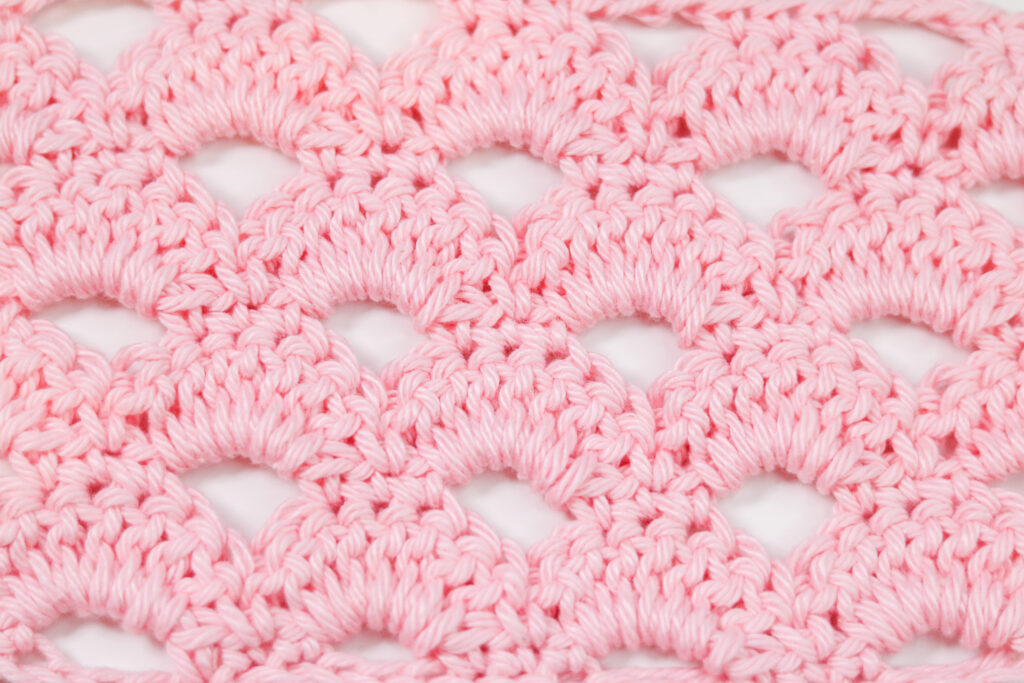
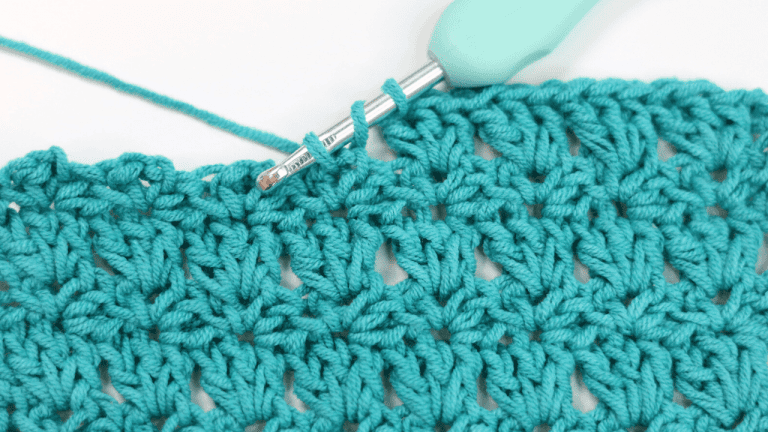
Learn how to crochet the colander stitch with my free step-by-step pattern available in both UK and US terms PLUS a video tutorial in right and left-handed versions. The crochet colander stitch is a beautifully textured and airy stitch that creates a breathable fabric with a lacy, modern look. In this blog post, I’ll walk you through the step-by-step process of mastering this unique stitch, along with tips for maintaining tension to ensure your spacing is consistent.

About this Stitch
- Lacy & Open: The stitch creates intentional spaces, making it ideal for projects that need ventilation and drape.
- Repetitive & Easy to Memorize: The pattern typically consists of basic stitches like chains, single crochets, and double crochets, making it easier than it looks.
- Versatile: It can be worked in rows or rounds and easily adapted for different project sizes.
- Great for Layering Pieces: Because of its airy nature, it’s perfect for lightweight garments and accessories.
Ways to Use This Stitch
- Garments
- Scarves
- Shawls
- Market Bags
- Openwork Blankets
Pattern Notes
- Written in UK terms but switchable to US crochet terms below.
- Skill Level: Intermediate
- Stitch Multiple: 8 + 1
Need Pattern Support? Join Our Facebook Group
The fastest way to get pattern support is to ask in our dedicated facebook group for Bella Coco Crochet patterns. This is the best place for you to connect with other crocheters.
Please note, if you wish to change and adapt this pattern in any way, this must be done at your own exploration and we cannot offer assistance with this.
Materials & Tools
- Yarn: I have used Paintbox Cotton DK However, You can use any weight yarn and recommended hook size that can be found on the belly band to your chosen yarn.
- Hook: 4mm (G -6) or corresponding hook size to the yarn weight chosen.
- Darning Needle
- Scissors
- Tape Measure
Where to Shop Yarn
Convert Pattern Terms
Here you can quickly switch between UK and US crochet terms. This will make following the pattern easier as all terms will be converted to your preferred version.
Terms & Abbreviations
Chain(s): ch(s): Yarn over, pull through loop on the hook.
Slip Stitch(s): ss(s): Insert hook, yarn over, pull through stitch and loop on hook.
Double Crochet(s): dc(s): Insert hook into stitch, yarn over, pull up a loop, you will have two loops on the hook. Yarn over, pull through remaining two loops.
Treble Crochet(s): tr(s): Yarn over, insert into stitch, yarn over, pull up a loop, you will have three loops on the hook. Yarn over, pull through two loops, yarn over, pull through remaining two loops.
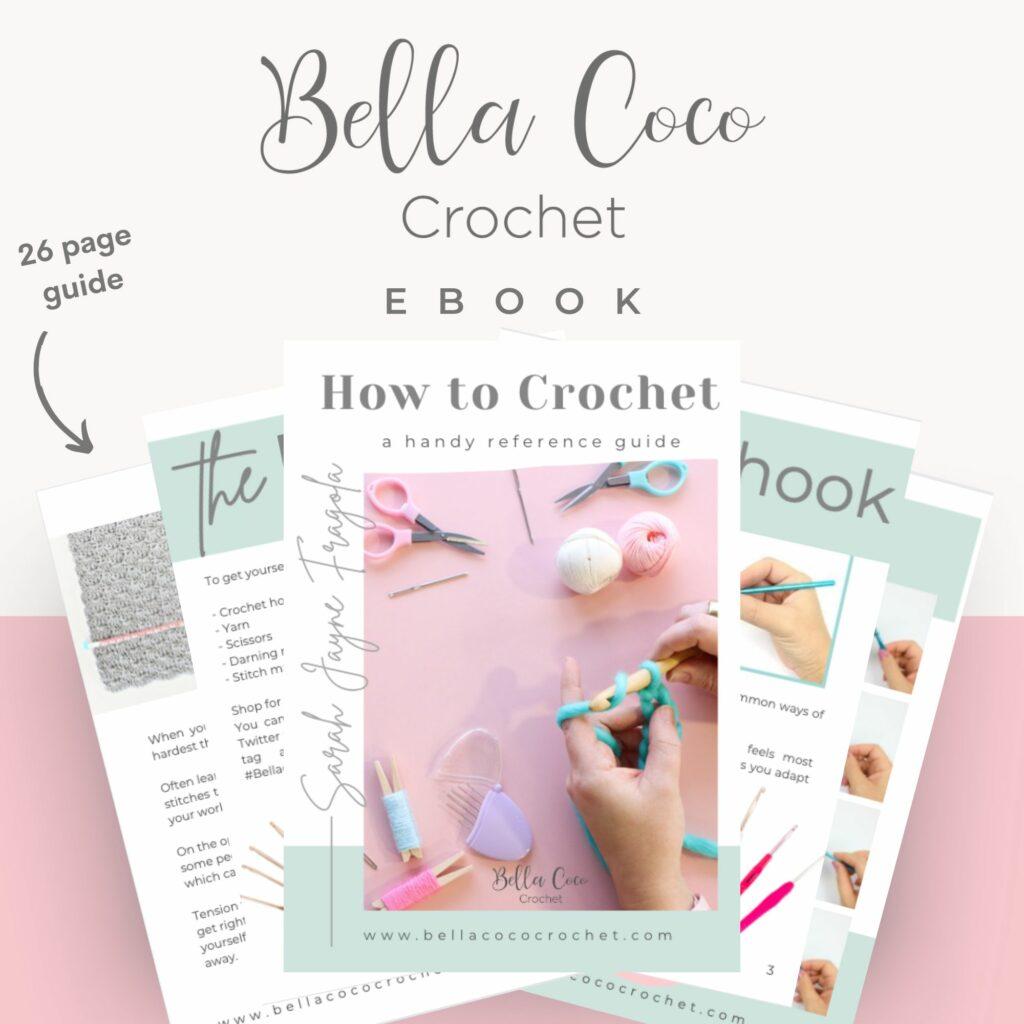
Unsure of the differences between UK and US terms? Need a refresher on how to do your crochet stitches? In my ‘How to crochet: A handy reference guide’ EBook I help you with all of these terms and you can always have them to hand! You will also get exclusive access to free video instructions. You can find my EBook HERE.
FAQs
Is this stitch suitable for beginners?
I always say if you like the look of a stitch, try it. If you’re comfortable with basic stitches like chain, double crochet, or treble crochet, you’ll likely pick it up quickly. I also recommend watching the video tutorial alongside following the written pattern. Lastly, take your time, practice slowly, and don’t worry if it feels tricky at first.
How do I keep count of my stitches?
Using stitch markers can make a huge difference, especially at the beginning and end of rows or rounds. Counting regularly after each row will also help you spot mistakes early before they become harder to fix. If you’re still struggling, add stitch markers after every 5 or 10 stitches.
My edges are uneven! What am I doing wrong?
Uneven edges usually happen when stitches are accidentally added or missed at the ends of rows. Pay close attention to where the first and last stitches go, and count your stitches often to make sure the total stays consistent. Using stitch markers can help with this. CLICK HERE for more help starting and ending rows with confidence.
What should I do if I make a mistake?
Mistakes happen to every crocheter! If you notice an error a few stitches back, gently pull out the stitches to the problem area and try again. In the crochet world, we call this frogging, and it’s all part of the learning process.
Why do my stitches vary in size?
This will be your tension. If you struggle with your tension and find your crochet stitches are inconsistent, or they get tighter or looser, I can help fix this with the golden loop! CLICK HERE to help fix your tension issues.
How long does it take to learn a new crochet stitch?
Some stitches click immediately, while others take a little more practice. Give yourself time to repeat the stitch pattern slowly, and don’t be afraid to pause and replay tutorials. Practice makes progress.
Free Crochet Pattern: Colander Stitch
You are viewing this pattern in UK terms.
Foundation: Ch in multiples of 8 + 1
Row 1: dc in second ch from hook (skipped ch does not count as st), dc in each ch across. Turn.
Row 2: 3 ch (counts as tr here and throughout), *tr in next 6 sts, 2 ch, skip 2 sts, rep from * until 7 sts rem, tr in last 7 sts. Turn.
Row 3: 1 ch (does not count as st here or throughout), dc in next 7 sts, *2 dc in ch sp, dc in next 6 sts, rep from * until 1 st rem, dc in top of 3-ch. Turn.
Row 4: 3 ch, tr in next 2 sts, 2 ch, skip 2 sts, *tr in next 6 sts, 2 ch, skip 2 sts, rep from * until 3 sts rem, tr in last 3 sts. Turn.
Row 5: 1 ch, dc in next 3 sts, 2 dc in ch sp, *dc in next 6 sts, 2 dc) in ch sp, rep from * until 3 sts rem, dc in each of the last 3 sts. Turn.
Rep Rows 2–5 until desired height.
Fasten off and sew in ends.

Video Tutorials
Right-handed
Or watch on YouTube
Left-handed
Or watch on YouTube
Crochet Stitches To Try Next
Have you tried these beautiful, modern lace-look stitches?


Explore The Stitch Library

Let’s Stay Connected!
I always love to see your makes so if you try any of my patterns or follow my stitch tutorials please tag me @bellacococrochet or use the #bellacococrochet


I think there may an error in the US terms pattern. Should row 2 be sc instead of dc?